
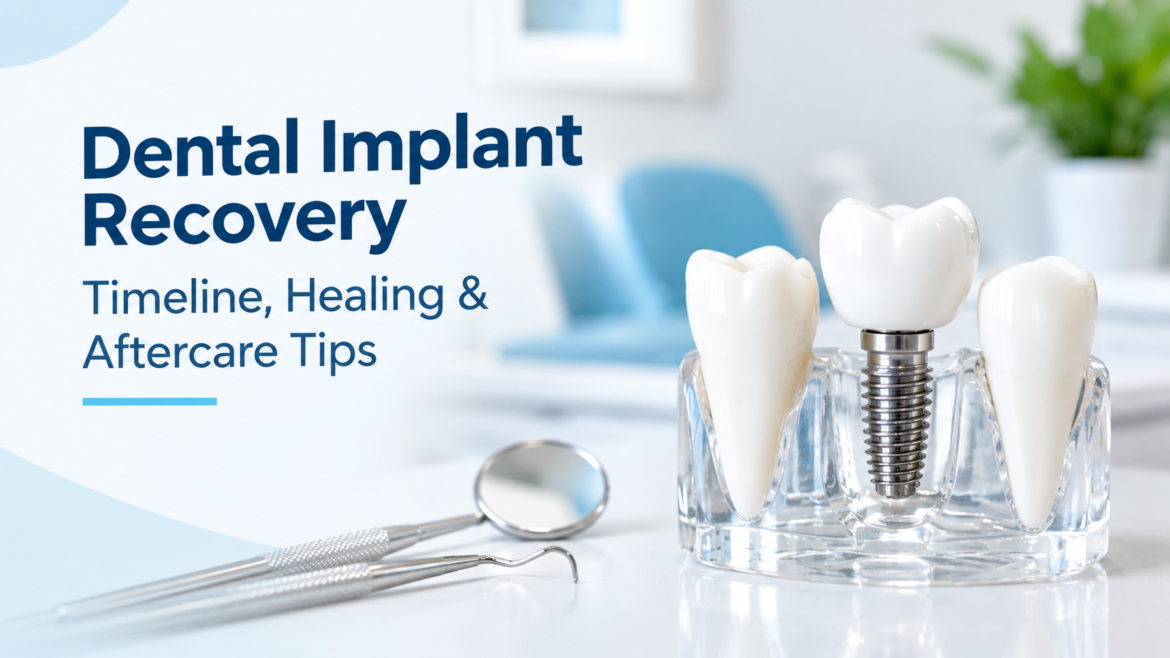
Recovery time from dental implant surgery can be quite long and needs proper care for the complete recovery process. Swelling, pain or bleeding in the initial days is quite common in most patients and starts fading away with time.
The length of time required for full healing, however, will depend on the type of procedure, the condition of the bone and the individual’s particular situation. For those thinking about getting Dental implants in Geelong, it is helpful to know the recovery timeline and to follow the instructions given by your dentist in order to prepare for each stage of the treatment.
What Is the Dental Implant Recovery Timeline?
The healing process after getting the dental implant is divided into several stages, and whereas the gums may heal in a couple of weeks, the implant takes longer since it has to attach itself to the bone. This attachment process is referred to as osseointegration, and it takes around three months or even longer depending on the individual’s case.
The following is an overview of what to expect following a dental implant recovery procedure.
First 24–48 Hours: Resting Period
Swelling, tenderness, and even some bleeding are normal in the first two days, and the mouth may be tender around the surgical site, especially when eating and talking. You have to make sure to rest and follow your dentist’s instructions.
During this period:
- If your dentist recommends it, use a cold pack externally.
- Have soft, cool, or lukewarm food.
- Avoid strenuous exercise and heavy physical activity.
- You should not use your fingers or tongue to disturb the surgical site.
- Take the medicines your dentist has advised you to take.
Days 3–7: Managing Swelling and Discomfort
The most pronounced state of the condition is achieved on either the second or the third day, but after that, it gradually subsides. Additionally, bruising and tenderness might occur as well. Maintaining proper dental hygiene and abstaining from chewing hard food near the implant is important at this point.
In case of increasing levels of pain or swelling, consultation with your dentist should be sought out immediately. This goes for the cases of prolonged bleeding, fever, and discharge as well.
Weeks 2–3: Gum Healing
The gum tissue will keep on healing during the following weeks, and you might discover that eating and speaking become more comfortable as the area settles down. At the same time, the implant could still be integrating with the jawbone.
Make sure to attend all your scheduled review appointments so that your dentist can examine the surgical site and talk over your progress.
Three Months and Beyond: Bone Integration
The time it takes for bone to integrate is greater than the time it takes for the gums to heal; in most cases, this period is about three months, even though in some instances patients require more time. If a bone graft or other operations are needed, then the length of treatment could be extended.
The dentist will decide if the implant is ready to proceed to the next stage, for example, the fitting of the final crown or some other restoration.
Essential Dental Implant Aftercare Tips
Proper implant aftercare will help to keep the surgical area clean as it is healing. Your dentist will give you specific instructions according to the kind of surgery carried out. You should follow those instructions.
Keep Your Mouth Clean
- Maintain good oral hygiene to reduce plaque buildup
- Brush gently and carefully
- Follow the instructions of your dentist
- Use a prescribed mouthwash
- Do not rinse vigorously or spit during the early stage of healing.
- After the area has healed, clean around the implant properly.
Choose Foods That Can Easily Be Chewed
Your food choice can also help ease you into the initial days; start with soft foods and then gradually move to your regular diet, as advised by your dentist.
Some good choices that you could consider eating after the procedure are yoghurt, soft eggs, mashed vegetables, lukewarm soups, and soft and easily chewable foods such as fish.
Don’t Smoke and Take Medications As Prescribed
Smoking will only impede the process of healing and increase the risk of complications as a result of the implantation. You are therefore supposed to abstain from smoking while you are recovering; and if possible, consult your dentist about how you can quit smoking.
What influences the success rate of the dental implant?
The implant success rate is affected by many factors, including the condition of the bone, the condition of the gums, overall health, smoking, and oral hygiene; it is also determined by the complexity of the procedure and the integration of the implant with the jawbone.
There is no one success rate for everyone. Your dentist will be able to give you information about possible benefits, risks, and outcomes after your examination and treatment plan.
To help maintain your implant over time:
- Brush your teeth twice daily
- Daily flossing
- Regular dental check-ups and cleaning
- Avoid smoking
Prepare for a Comfortable Recovery with Smile Care Dentists
At Smile Care Dentists, we offer dental implant treatment in Geelong, making sure that each patient’s dental requirements and individual treatment plan are taken into account. Our team will be able to explain to you the various stages, the expected length of healing and the aftercare instructions that are appropriate for your particular situation.
Contact us for Dental Implants in Geelong today to arrange a consultation and find out more about your options and what recovery might involve?